An independent, NFA-registered futures Introducing Broker serving serious traders, family offices, and commercial hedgers globally since 2003.

Shane Wisdom
A futures broker since 1994, Shane specializes in systematic trading strategies and personally executes orders for the trading systems our clients run. When you work with Wisdom Trading, you deal directly with a principal — not a call center.
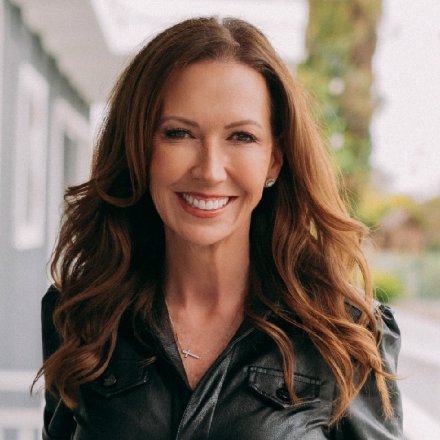
Angie Wisdom
Angie leads finance and compliance at Wisdom Trading, making sure the firm meets its regulatory obligations and that every client relationship is handled with care and integrity.
Trusted by investors who demand results.
“Exactly what you want from a good IB. Exceptional customer service, streamlined back office, and innovative tools to help bridge investors with managers.”
“Their vast experience and knowledge of global futures markets will save you time and money. The entire staff puts great effort into the relationship.”
“I’ve robo-traded using three different brokers and I’m happiest by far at Wisdom Trading. They have a level of service that others simply do not.”
Our Story
Wisdom Trading was founded in 2003 by futures-market professionals who believed that serious traders deserved better than what the big retail brokerages were offering. We’ve spent the last two decades building exactly that: a boutique commodity futures brokerage with institutional infrastructure, deep technical capability, and zero proprietary trading conflicts.
Regulatory Status
Wisdom Trading is a registered Independent Introducing Broker with the Commodity Futures Trading Commission (CFTC) and a member of the National Futures Association (NFA). You can verify our registration on the NFA BASIC system.
Clearing Relationships
Client funds are never held by Wisdom Trading directly. Every account is cleared through one of three top NFA-regulated Futures Commission Merchants:
- TradeStation — a leading electronic brokerage with award-winning futures platforms
- StoneX — global financial services firm with deep commodity market infrastructure
- Phillip Capital — Asian-rooted global brokerage with multi-asset clearing capability
What We Do
We offer four services, each backed by 20+ years of futures expertise:
- Trading System Development & Execution
- Managed Futures Programs
- Direct Market Access Brokerage
- Boutique Advisory & Hedging
Office and Contact
Wisdom Trading
2043 Westcliff Dr, Suite 208
Newport Beach, CA 92660
United States
Phone: 1 (800) 854-6354
Email: info@wisdomtrading.com
The Wisdom Trading Investment Philosophy
Twenty-plus years of clearing trades for systematic and discretionary clients in the futures markets has produced a fairly clear set of beliefs about what makes a serious trading operation work. None of these are new. None are clever. They are the things we keep watching survive across regimes.
Transparency over story
We have a strong preference for strategies and managers who can explain, in writing, exactly what they do and what conditions would cause them to do something different. Story-heavy programs tend to be the ones that disappoint in regime changes. Programs with crisp rule sets and acknowledged blind spots are more honest about their own limits, and easier to allocate to consistently.
Capacity is real
A great strategy at small size is not the same strategy at five times the assets. We watch for capacity-driven drift in everything we look at. Where it matters, we say so to clients before they allocate. A broker that pretends capacity is unlimited is either inexperienced or is selling something.
Drawdowns are the price of admission
Every program worth allocating to has a drawdown profile that will, eventually, test the relationship. We try to make sure clients understand, before money moves, what the historical drawdown depth and duration looks like, and what conditions caused it. The conversations we have during a drawdown are easier when the conversations before the drawdown were complete.
Operational excellence is undervalued
Trading performance gets all the attention. Reconciliation, statement delivery, margin call handling, regulatory reporting, and roll discipline get none of it — until they break. The broker’s job is to make sure the boring parts do not break, so that the interesting parts of the business can compound.
What Twenty Years of Continuous Operation Teaches You
Wisdom Trading has cleared customer business continuously since 2003. That has included the 2007–2008 financial crisis, the 2010 flash crash, the 2014 commodity collapse, the late-2018 volatility shock, the COVID dislocation in March 2020, the 2022 rate-regime reset, and several years of trading-strategy waves in between. A few observations from that.
Regime change is the rule, not the exception
People talk about “normal markets” as if they were the default. They are not. Every five to seven years, the structural backdrop — the level of interest rates, the dollar regime, the volatility regime, the correlation between assets — resets meaningfully. Strategies that depend on a single regime continuing tend to be the ones that fail when it ends. Strategies built to accept that conditions will change tend to compound across the cycles.
The right relationship outperforms the cheapest commission
The lowest-commission broker is rarely the one you want during a fast market, a margin call, or a regulatory inquiry. We have seen serious traders save themselves more in operational quality than they would have saved on a few cents per contract. The cost equation is a total-cost equation, not a commission equation.
Counterparty diversification has gotten more important
The post-2008 environment made it clear that a single clearing relationship is a single point of failure. Most of our clients hold accounts at more than one of our three FCMs — StoneX, Phillip Capital, and TradeStation — for exactly that reason. Operational continuity is a piece of risk management that gets ignored until the day it matters.
Survivorship bias warps the strategy landscape
The trading programs you see today are the ones that survived. The ones you do not see — the ones that failed in the past two decades — outnumber them by a significant multiple. We try to be honest with clients about what that means for backtest-derived expectations. The average reported track record in our category is a number that has been pulled upward by attrition.
Operational Infrastructure and Compliance
The operational side of an Introducing Broker is the part of the business that clients should rarely have to think about. We invest in it accordingly.
Trade reconciliation and statement delivery
All client trades are reconciled daily against the clearing FCM’s records. Statements arrive from the FCM directly on a daily and monthly cycle, and we cross-reference them against our internal records. Discrepancies — rare, but not zero over twenty-plus years — get resolved before the client sees the next morning’s statement.
Regulatory reporting
All required NFA and CFTC reporting flows through our compliance process: large trader reports, position limits, ownership disclosures, suitability documentation, and the periodic regulatory reviews that every NFA member undergoes. We have never had a material disciplinary finding. Verifiable at the NFA BASIC system under ID 0359020.
Audit trail and recordkeeping
Every order, modification, fill, and cancellation in a client account is logged through the clearing FCM’s audit trail and through our independent record. We retain records for the full periods required under NFA Compliance Rule 2-10 and CFTC Regulation 1.31. In the rare circumstance where a regulator requests historical data, we can produce it the same day.
KYC and onboarding
Account opening involves the standard NFA-compliant Know-Your-Customer documentation, beneficial-ownership disclosure for entity accounts, and suitability documentation appropriate to the trading style proposed. The process is professional, not friction-free; we would rather get the onboarding right than save a client thirty minutes at the cost of an audit finding three years later.
How We Choose Which Programs and Strategies to Represent
We are a broker, not an allocator, but we do a substantial amount of work to make sure the managed-futures programs and trading systems we discuss with clients meet a meaningful bar. The criteria we apply, briefly:
Track record verifiability
The track record has to be verifiable. We will not represent a program whose historical performance cannot be independently confirmed at the clearing FCM level. Hypothetical and simulated returns get filed under “interesting context” and never under “performance claim.”
Drawdown discipline
We pay attention to how a program has behaved in its worst historical environment. Programs that have never been tested in a stressed regime are necessarily incomplete data points; programs that have been tested and recovered are giving us information.
Operational integrity
Beyond performance, we look at how a program handles its own operational obligations: NAV publication, fund administration, audit, statement delivery, and communication during difficult periods. A program that communicates well in good months is testing how it communicates in bad ones.
Capacity-aware sizing
We try to allocate clients to programs at sizes where capacity is not yet a problem. When a program approaches its stated capacity, we discuss it with clients ahead of the program closing, not after.
The Boutique Difference
The largest futures brokers in the United States serve hundreds of thousands of accounts. The smallest serve dozens. Wisdom Trading is closer to the second end of that spectrum than the first, and intentionally so.
At our size, every active client has a primary contact who knows their account, their strategy, their tax structure, and their typical operational rhythms. When a client calls during a fast market, the person who answers the phone is the person who handles the account day-to-day. That is structural, not optional. We are not built to scale beyond it.
The trade-off is that we are not for everyone. Casual retail traders who want a one-click app and a 24-hour chat queue should go elsewhere; they will get a better experience from a firm built for that. Serious traders, hedgers, and allocators who value continuity and judgment over scale and self-service tend to find that the boutique model fits.
Communication and Reporting Cadence
Every active client should expect, at minimum: daily and monthly account statements from the clearing FCM; cross-referenced internal reporting from us; quarterly strategic check-ins by phone or email; and ad-hoc communication during periods of unusual market activity. More-engaged clients hear from us more often than that. Less-engaged clients hear from us at least the minimum cadence above, no matter how quiet the markets are.
For managed-futures clients specifically, we relay manager communications — monthly commentaries, annual reviews, any operational changes — in plain language, with our own perspective on what is worth attention and what is routine. For trading-systems clients, we discuss live versus expected behavior on a schedule that matches the strategy’s natural reporting frequency. For commercial hedgers, we produce quarterly written reviews suitable for board or family-office distribution.
Wisdom Trading vs. Other “Wisdom” Companies
Search engines sometimes confuse Wisdom Trading with unrelated firms that share part of our name. To be clear about who we are:
- Wisdom Trading, Inc. — that’s us. A U.S.-based, NFA-registered Independent Introducing Broker, established 2003, operating exclusively in the regulated U.S. futures and options markets. NFA ID 0359020. Headquartered in California.
- We are not Wisdom Trading Ltda, a Portuguese entity unaffiliated with our firm.
- We are not Wisdom World Trading Inc, a separate company with no relationship to ours.
- We are not “Wisdom Follow” or any copy-trading or social-trading platform.
- We are not Wisdom Commodities LLC, a separately registered entity in a different jurisdiction.
If you’ve reached this page while researching a different firm, the easiest verification is our NFA registration: every NFA member’s status and disciplinary history is searchable at nfa.futures.org/basicnet. Our ID is 0359020, registered as Wisdom Trading, Inc.
How We Work With Clients
Our typical client engagement runs in three phases — an initial discovery conversation, an introduction to the specific service that fits, and ongoing execution and reporting.
Discovery
Every new relationship starts with a no-obligation conversation. We learn what you’re trying to accomplish, what capital you have allocated, what time horizon you’re working with, what tax structure you’re using, and what tools or platforms you already have in place. This conversation takes 20–30 minutes. If it’s not a fit, we’ll tell you so — sometimes the right answer is a different broker entirely, and we’d rather earn a referral later than waste your time now.
Match-Making
Once we understand the situation, we recommend the service that fits: managed futures programs for hands-off systematic exposure, our trading systems services for active strategy developers, direct market access brokerage for self-directed traders, or boutique advisory and hedging for commercial firms with exposure to manage. We don’t pitch services we don’t believe make sense for the situation.
Execution and Reporting
From there, we handle the operational side — account opening with one of our three FCMs (StoneX, Phillip Capital, or TradeStation, chosen for the strategy), platform setup, statement delivery, regulatory reporting, and ongoing communication. Most clients hear from us at least once a quarter; many more often.
What That Looks Like in Practice
A managed futures investor might allocate to a CTA we know personally, receive daily and monthly statements, and review allocation drift annually with us. A systematic trader might develop strategies in Trading Blox with our input, deploy them through TradeStation or NinjaTrader with our execution oversight, and discuss live performance vs. backtest monthly. A producer hedging crop exposure might work with us on a rolling hedge calendar that gets revisited as harvest approaches and basis evolves.
None of this is high-frequency; almost all of it is high-stakes for the people involved. We work accordingly.
Frequently Asked Questions
Is Wisdom Trading regulated?
Yes. We are an NFA-registered Independent Introducing Broker (IB), NFA ID 0359020. Our status, history, and any disciplinary record (we have none) is verifiable directly at the National Futures Association’s public BASIC system.
What type of clients does Wisdom Trading work with?
Most of our clients fall into one of four buckets: high-net-worth individuals allocating to managed futures, active systematic traders who want broker-level support for their strategies, commercial firms with commodity hedging needs, and family offices or smaller funds that want institutional-quality execution without institutional minimums. We do not target casual retail speculators.
How is Wisdom Trading different from a discount broker?
Discount brokers compete on commission alone and serve a high volume of self-directed accounts with minimal contact. We compete on judgment — which CTA fits your situation, which platform makes sense for your strategy, how to structure a hedge that survives a roll. The commission is a part of the relationship, not the whole relationship.
Does Wisdom Trading have a proprietary trading desk?
No, and that’s deliberate. A broker that also trades its own capital has structural incentives that don’t always align with its clients. We make money on customer trades; we have no other position to defend.
How long has Wisdom Trading been in business?
Since 2003. We’ve cleared continuously through the 2008 financial crisis, the 2014 commodity collapse, the 2020 COVID volatility, the 2022 rate shock, and every regime in between. Same firm, same principals, same regulatory record.
Where is Wisdom Trading based?
We are a U.S.-incorporated firm. We work with clients globally, but all account activity flows through U.S. NFA/CFTC-regulated infrastructure (our FCMs: StoneX, Phillip Capital, TradeStation).
How do I start a conversation?
The fastest path is the contact form on this site, or send a note directly. We respond to qualified inquiries the same business day. There is no obligation in the first call.