

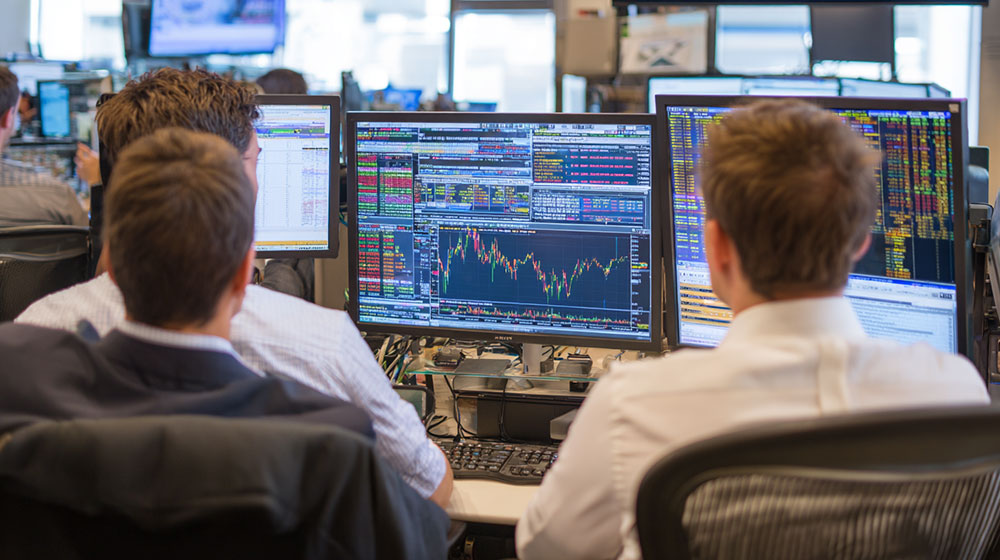
Volatility is the heartbeat of the futures markets. It’s what creates both opportunity and risk — the movement that traders seek to profit from, and the uncertainty that can test even the most disciplined systems.
For systematic traders and investors, understanding volatility isn’t just about reacting to price swings — it’s about using volatility as a tool to guide position sizing, timing, and strategy selection.
In this guide, we’ll explore what volatility really means, how it impacts futures trading, and practical ways to measure, interpret, and manage it effectively.
1. What Is Volatility — and Why It Matters
At its core, volatility measures how much prices fluctuate over time. In futures trading, volatility reflects the degree of uncertainty or risk associated with the size of price changes.
High volatility means large, frequent price swings — typical of markets reacting to news, economic reports, or shifts in global sentiment. Low volatility indicates a calmer market, often seen in range-bound or consolidating periods.
Why volatility is crucial for futures traders:
- It determines risk exposure — wider price swings increase the probability of hitting stop-loss levels.
- It influences margin requirements — clearing firms and exchanges adjust initial and maintenance margins based on volatility.
- It shapes strategy performance — trend-following systems tend to thrive in high-volatility environments, while mean reversion systems often perform better in stable, low-volatility conditions.
In short, volatility defines the playing field. Ignoring it is like sailing without watching the wind.
2. Measuring Volatility: Tools and Indicators That Matter
Professional traders don’t guess volatility — they quantify it. Here are the most widely used tools for measuring and monitoring market volatility in futures:
a. Historical Volatility (HV)
Historical volatility measures the standard deviation of price changes over a specific period. It shows how volatile a market has been, based purely on past price data.
For example, if the S&P 500 futures have a 20-day historical volatility of 15%, it means that daily returns have fluctuated roughly 15% (annualized) around their mean.
b. Implied Volatility (IV)
Implied volatility, derived from options pricing, reflects the market’s expectation of future volatility. Rising IV often signals that traders anticipate bigger moves ahead — even before they happen.
While implied volatility data is more common in options markets, futures traders monitor it as a forward-looking sentiment gauge, especially for major indices and commodities.
c. Average True Range (ATR)
The ATR indicator is one of the most practical tools for traders. It measures the average range (high to low) of price movements over a given number of periods — helping traders adjust stop-losses, targets, and position sizes in real time.
For example:
- If ATR on Gold futures rises from 15 to 25 points, volatility has increased — meaning traders should reduce position size to maintain consistent risk.
3. Volatility’s Impact on Trading Strategies
Different trading approaches respond differently to volatility. Understanding this relationship helps traders align their systems with the current market environment.
a. Trend-Following Strategies
Trend followers thrive when volatility expands. Strong moves create sustained price trends that breakout systems can capture.
However, sudden volatility spikes can also trigger whipsaws — false breakouts that shake out positions. Systematic traders often apply volatility filters (like ATR or Bollinger Band width) to confirm trend strength before entry.
b. Mean Reversion Strategies
Mean reversion models perform better in low-volatility, range-bound conditions where prices oscillate around a mean.
When volatility spikes, these systems can fail quickly as prices “escape” their normal boundaries — underscoring the importance of volatility-based stop placement.
c. Fusion or Multi-Strategy Systems
Blending strategies (trend + mean reversion + momentum) can help traders smooth performance across volatility regimes. By allocating to uncorrelated systems, traders reduce dependence on a single volatility environment — a key principle in systematic portfolio design.
4. Managing Risk with Volatility-Based Position Sizing
Volatility directly influences how much you should trade. High volatility means greater uncertainty — and smaller position sizes. Low volatility means tighter risk — allowing for larger exposure.
A practical method to adapt to volatility is volatility-adjusted position sizing:

This formula scales exposure inversely to volatility. As volatility rises, ATR increases — automatically reducing your position size to keep your dollar risk per trade constant.
This approach is central to systematic risk management and ensures that no single market move, regardless of volatility, jeopardizes your portfolio.
5. Volatility and Margin Requirements
In futures trading, volatility isn’t just theoretical — it has a direct financial impact through margin requirements.
Each exchange and FCM (Futures Commission Merchant) sets initial and maintenance margins that reflect current market volatility.
For example:
- During periods of high volatility (e.g., oil price shocks or geopolitical events), exchanges raise margin requirements to control risk.
- Conversely, in calmer markets, margins often decline.
This means traders must manage available capital and leverage dynamically, ensuring adequate liquidity during volatile periods to avoid forced liquidation.
6. Adapting to Volatility Regimes
Markets move through volatility cycles — periods of expansion and contraction. Recognizing these regimes helps traders adapt proactively.
- Low to High Volatility Transition: Often precedes breakouts. Trend-following systems typically gain traction here.
- High to Low Volatility Transition: Markets consolidate, favoring mean reversion.
- Extended High Volatility: Demands reduced leverage and wider stops.
- Extended Low Volatility: Encourages smaller targets and tighter ranges.
Systematic traders often use volatility filters or moving averages of ATR to adjust strategy allocation dynamically — maintaining robustness across environments.
7. Practical Tips for Trading in Volatile Markets
- Lower Position Size: Reduce exposure when volatility spikes to preserve capital.
- Widen Stops, Not Risk: Use wider stop distances but maintain the same dollar risk by reducing contract size.
- Stay Diversified: Uncorrelated markets can offset volatility in others.
- Avoid Over-Leverage: High volatility and leverage amplify losses.
- Respect Your System: In volatile conditions, discipline beats prediction.
Conclusion: Volatility Is Opportunity—If Managed Correctly
Volatility isn’t something to fear—it’s what makes futures trading possible. Without price movement, there’s no profit potential. The key lies in understanding and managing it intelligently.
By quantifying volatility, adjusting position sizes, and aligning your strategy to the current market regime, you can turn volatility from a source of stress into a strategic advantage.
At Wisdom Trading, we’ve helped traders navigate volatile markets since 2003 — leveraging systematic strategies, transparent execution, and professional-grade risk management through top-tier FCMs like R.J. O’Brien, StoneX, and Phillip Capital.
Volatility will always be part of the market’s nature. The traders who master it — rather than fear it — are the ones who stay in the game long enough to succeed.
About Wisdom Trading
Wisdom Trading is an independent, NFA-registered Introducing Broker specializing in systematic futures trading and transparent, commission-only execution. With over two decades of experience, we provide traders access to professional strategies, diversified global markets, and deep liquidity through trusted clearing partners.